Breathing in, I see the conditions of happiness already present. Breathing out, I smile to them.
Breathing in, I touch the seeds of gratitude. Breathing out, I water those seeds.
Breathing in, I hold my suffering with tenderness. Breathing out, I nourish understanding and peace.
Thich Nhat Hanh, the renowned Buddhist monk, wrote the following:
“The lotus flower is not possible without the mud. Understanding and compassion are not possible without suffering. I would never want you to be in a place where there’s no suffering, because in such a place you wouldn’t have a chance to learn how to understand and be compassionate. It’s by touching suffering that we have a chance to understand people and their suffering. By understanding our own suffering and the suffering of others, we begin to know what it means to be compassionate. It is only against a background of suffering that we can recognize our happiness.
I remember during the war in Vietnam we wanted so desperately just to have a cease-fire for twenty-four hours—twenty-four precious hours with no bombs dropping, no one being killed. But if we have not lived through a war, we don’t know how to appreciate twenty-four hours of peace, twenty-four hours without the horrors of war.
So we need suffering in order to recognize our conditions of happiness. No lotus flower can be without the mud.” ~ Thich Nhat Hanh
This newsletter is a bit different today. The last few months have been filled with a lot of loss in the One You Feed universe.
A good friend of mine lost his son shockingly and unexpectedly in a ski accident. Then my mom's health declined precipitously, and she died two weeks ago. This weekend, my best friend Chris, co-founder and editor of the podcast, had his dog Penny die suddenly.
All of it makes me think of a scene from The Crown. The Queen and the Queen Mother are watching Jacqueline Kennedy Onassis on TV after the assassination, and the Queen Mother says:
“Didn’t you say how unhappy she was in the marriage?”
Elizabeth replies:
“Yes. But that’s the thing about unhappiness. All it takes is for something worse to come along, and you realize it was actually happiness after all.”
Sometimes people will say to me, “Well, it can’t get any worse.” I will semi-jokingly say, “Do not tempt fate. It can always get worse.”
Mark Nepo calls this “the terrible knowledge,” the awareness that we can be erased in a second. And so can anything we love. (If you’re interested in Mark’s work, see below for a special event this evening celebrating the launch of his new book, The Language of the Soul.)*
So what do we do with all this? (In addition to grieving our losses.)
Should we live on guard, bracing ourselves for the inevitable hardships to come? I don’t think that works. It sucks the joy out of life as it is and does not take away the sting of loss.
The Stoics and the Buddhists recommend contemplating the reality of death regularly as a way to prepare and to appreciate the preciousness of life. This is a valuable practice, but sometimes hard to do.
I want to leave us with something that faces toward life, not away from it. Frank Turner (previous podcast guest, the person whose sharing of my book brought me the most joy, and, according to Spotify, my most-streamed artist of all time) says this at the end of his song Polaroid Picture:
"Let go of the little distractions Hold close to the ones that you love 'Cause we won’t all be here this time next year So while you can, take a picture of us”
The thing that I find most valuable there is that there are two clear actions.
The first is to let go of the little distractions. What things are we worrying about, fretting about, or thinking about that matter little in the grand scheme of our lives?
And the second is to hold close to the people we love. Paying a little bit more attention to them, reaching out a little bit more often, making a bit more effort. Pausing to appreciate that they are in our lives.
None of that erases the losses or even prepares us for the next loss, but they do offer a way of living more meaningfully in the happiness that is present. Try this:
Spend five minutes today setting down whatever “little distractions” have your attention, and instead spend those five minutes connecting with someone you love. Reflect on this:
What is the current thing in your life that you are unhappy about that you would miss desperately if it were gone?
Until next time,
Eric
*Tonight in New York City: Mark Nepo is celebrating the launch of The Language of the Soul with a live conversation hosted by The New Center for Holistic Learning. You can learn more here: The Language of the Soul Event
Following are Thich Nhat Hanh’s closing remarks to over two thousand people attending his Day of Mindfulness at Spirit Rock Center in Woodacre, California, in October 1993.
My dear friends in California, happiness is not something you get from outside. To me, happiness is born from peace. With the practice mindfulness we can calm our body and our mind. Then peace and happiness become possible. The Buddha body is in us. Using the energy of mindfulness we can touch the body of the Buddha within us and around us at any time. And I know the sangha body is in me and around me. The trees, the grass, the blue sky, the flowers are all elements of my sangha. And you are my sangha body. You take care of me.
In Vietnam, we used to say, “When a tiger leaves his mountain and goes to the lowlands, he will be caught by humans and killed.” When a practitioner leaves his or her sangha, at some time she will abandon her practice. We have to take refuge in our sangha, our community of practice. We cannot continue our practice very long without a sangha. The art of sangha building is crucial to our practice.
If a sangha is available in your area, please keep in touch and take refuge there. If the sangha doesn’t have the quality you expect, don’t abandon it. Do not look for a perfect sangha. Stick to the one you have and try, with your practice and your joy and peace, to improve its quality. This is very important.
If there is no sangha available where you are, then practice looking deeply in order to identify elements of your future sangha around yourself. Members of your sangha may be your child, your partner, and a beautiful path in the wood. The blue sky and the beautiful trees are also members of your sangha. Please use your talent and your intuition to create a sangha for your own support and practice. We all need a sangha very much.
Our practice should be supported by the people around us, and we can learn how to support them in return. We support them by looking deeply so we can recognize the seeds of peace, joy and loving kindness in them. We touch these seeds, we water these seeds every day in order to make other persons bloom like flowers. And when these persons bloom like flowers, we all become happier. We have to help each other in our practice. The practice of meditation is not an individual matter. We have to do it together.
The Buddha, Shakyamuni, our teacher, predicted that the next Buddha would be Maitreya, the Buddha of love. We desperately need love. And in the Buddha’s teaching we learn that love is born from understanding. The willingness to love is not enough. If you do not understand, you cannot love. The capacity to understand the other person will bring about acceptance and loving kindness.
It is possible the next Buddha will not take the form of an individual. The next Buddha may take the form of a community, a community practicing understanding and lovingkindness, a community practicing mindful living. And the practice can be carried out as a group, as a city, as a nation.
We know that in the spirit of the Lotus Sutra we are all students of the Buddha, no matter what tradition we find ourselves in. We should extend that spirit to other traditions that are not called Buddhist. We can find the jewels in other traditions—the equivalent of the Buddha, the dharma and the sangha. Once you are capable of seeing the jewels in other spiritual traditions, you will be working together for the goals of peace and brotherhood.
We should include everyone in our practice. Use your talents, your creative ideas. Organize a day of mindfulness in such a way that children love it. Many children who have come to retreats in North America have had a joyful time. And parents become happier when they see the children happy. Organize a day of mindfulness in such a way that our friends enjoy it and want to practice more and more. One day of mindfulness can bring about a lot of peace, friendship, understanding and love.
My friends, once again, you are my sangha body. I offer you all my support and wish you very strongly to take care of the sangha body which is our refuge. I take refuge in you, my sangha.
I love a good Target runas much as the next person. Stepping through the automatic doors of the popular superstore, it’s impossible to not feel uplifted. The lighting recalls the beckoning freedom of summer, and the colors are like a new crayon box. It’s a palpable promise of a fresh start.
One sweltering day several years ago, hearing the swoosh of the doors and feeling the relief from the sudden blast of air conditioning, I found myself drawn to an assortment of overflowing bins. “Happy Bargains!” a sign called out. “$1!” confirmed another. With my bright red cart, I eagerly approached. I mean, whowouldn’twant to go digging through bins to find a magical item that could yield joy? And at such low cost!
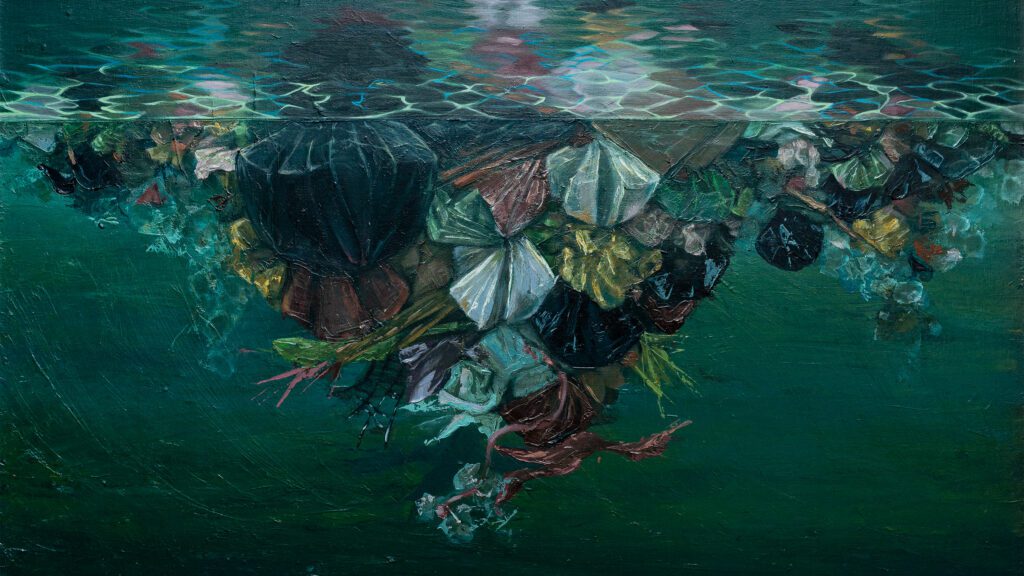
“Understanding the immensity of what’s at stake, how do we overcome the habit energy that drives us to pursue a kind of happiness that causes climate change?” I eventually picked something, but whether that item was a brightly colored notebook or a plastic cup with a sassy quip, I can’t recall what it was. However, I do remember that by the time I got home and unwrapped it on the kitchen counter, the promise of happiness had already faded. Like every other unnecessary item I’d ever purchased with the certainty that this was the thing that would finally solve the painful conundrum of being human, this thing was just more clutter. My interest in decluttering began on a family retreat with Thich Nhat Hanh. During one of his dharma talks, the Zen monk momentarily caught my eye while encouraging families to create what he called a breathing room—a space in the home for the practice of peace and compassion. A working mom of four school-aged kids, I became determined to create a breathing room for my family. I knew this meant I would need to let go of all the outgrown clothes, unused toys, and unfinished craft projects overwhelming our home. Yet when I attempted to do this, I realized that these possessions (possessions I’d purchased with the desperate hope that they could provide relief from suffering) were now causing me to suffer. Guilt, regret, worry, and anxiety about waste rose up to consume me, draining me of any real hope for change. And there, in the midst of my clutter, I bore witness to an endless cycle: Consuming emotions lead to consumer habits. Consumer habits lead to consuming emotions.“Wade” by Devan Horton www.devanhorton.comIn time, I became a professional declutterer, helping people realize that they—like me—had been caught in this cycle of consumption. I could hardly blame them for (literally) buying into the same delusion I had fallen for. The impulse to buy is remarkably human—and chasing after happiness even more so. Yet we’re not simply pursuing happiness; we’re running from our suffering toward some unfillable promise that, if we buy enough of the right things, we’ll find refuge. We know that illness, aging, and death are inextricable from our lives, and yet we still have the tendency to grab at every bauble as if it were a life preserver—an antidote to our impermanence. But our futile pursuit of a happiness that can be bought and sold is not just costing us in terms of overstuffed closets. I realized this when I transitioned unexpectedly from decluttering to the field of climate change.
When I started working in climate, I learned that for every “happy bargain” I purchase, a puff or two of carbon dioxide ascends to the atmosphere where it will remain for decades, trapping heat on the earth’s surface and warming the planet. Independently, the costs of my personal consumption are inconsequential. But multiply my habits by billions of consumers, and we begin to see the damage in millions of metric tons of daily carbon dioxide emissions.
We are pursuing individual happiness at the cost of our collective survival. We’re each attempting to outrun our suffering, and that suffering is gathering force in the atmosphere and circling back only to create more suffering. And though ultimately that suffering will touch every life on our planet, it will most gravely and unjustly impact those communities with the least economic resilience: those with the least economic capacity to run will suffer for the folly of those who have the economic resources to run the fastest. Our independent choices are no individual matter. We are careening down a dangerous path carried along by the momentum of what Thich Nhat Hanh would call our “habit energy”—energy acquired from our society that moves us along expediently without conscious thought or regard for outcome.
Understanding the immensity of what’s at stake, how do we overcome the habit energy that drives us to pursue a kind of happiness that causes climate change? One answer comes from a few lines of a gatha—a simple verse that I learned along with my children on that family retreat with Thich Nhat Hanh so many years ago:
Breathing in, I see myself as a flower. Breathing out, I feel fresh. Breathing in, I see myself as a mountain. Breathing out, I feel solid. Breathing in, I see myself as space. Breathing out, I feel free.
Here, in the midst of our steady, mindful breath, we’re reminded that the freshness and freedom we seek are not just characteristics of flowers and wide-open spaces; they’re also qualities inherent in us. We are reminded that, like mountains, we are solid and dignified; we have the sovereign capacity to be present to our suffering without being carried away by it or the urge to run from it.
So, the next time you’re standing in a superstore amidst overflowing bins wondering which bargain might offer respite from your discomfort, or your finger is hovering over the “Buy Now!” button on your phone screen, take some gentle breaths and repeat thatgatha, reminding yourself that freshness and freedom aren’t commodities, but gifts you carry. Tell yourself that you are solid as a mountain, and recall that you need not be carried away by your emotions or driven to consume as a panacea for your pain. In doing this, you won’t independently solve the problem of climate change, but you’ll resist the cycle of consumption driving it.
An equitable transition to a low-carbon economy is essential to our collective survival. We should work toward that transition with the urgency it demands. We should keep taking to the streets and calling our legislators to demand just environmental and economic policies that center the safety of the most marginalized. And as we do so, we can and should do what the Buddha proposed over two thousand years ago: stop trying to outrun suffering. Only then will we realize that happiness was never out of reach. Happiness and suffering—inevitable partners in life—dwell in the same location: precisely in the place we sit.
Bonjour et bienvenue à la méditation magique du bonheur.
Commence par t'asseoir de façon symétrique et tiens-toi droit sans que ce soit inconfortable.
Ferme les yeux afin de rentrer à l'intérieur de toi et ferme la bouche afin de ne respirer que par le nez.
Les narines filtrent mieux l'air entrant que la bouche et permettent également une respiration plus lente et donc plus sereine.
Deviens complètement immobile.
La seule chose qui bouge en toi est l'air qui entre et sort de tes narines.
Observe ta respiration.
Elle se passe sans que tu n'aies à faire quoi que ce soit.
Remarque comme l'air qui entre est plus frais que l'air qui ressort de tes narines.
Essaye de ressentir ton humeur du moment comme si tu inspectais tes émotions de l'extérieur.
Si pendant la méditation tu es perturbé par des pensées,
C'est normal et c'est pas grave.
Quand tu t'en rends compte,
Ramène simplement ton attention à la sensation de l'air qui entre et sort de tes narines.
Sans forcer,
Tâche de ralentir ta respiration de telle sorte qu'elle devienne comme un tout petit filet d'air qui vient te caresser à l'intérieur en rentrant et sortant de ton corps.
Comme si ce filet d'air était une substance magique qui t'apportait de la joie à chaque inspiration.
Comme si ce filet d'air était immensément fragile et que tu en étais le gardien.
Progressivement,
Le filet d'air devient de plus en plus mince,
Ta respiration de plus en plus lente.
Ici et maintenant,
Tu n'es rien d'autre que ce filet d'air qui entre et sort de ton corps.
Encore une fois,
Si pendant la méditation tu es perturbé par des pensées,
Des bruits ou des sensations physiques,
C'est tout à fait normal et c'est pas grave du tout.
Quand tu t'en rends compte,
Ramène simplement ton attention à la sensation de l'air qui entre et sort de tes narines.
Albert Einstein a dit qu'il n'y a que deux façons de vivre sa vie,
L'une en faisant comme si rien n'était un miracle et l'autre en faisant comme si tout était un miracle.
On va maintenant se concentrer sur douze affirmations pour faire en sorte que tu vois tout aujourd'hui comme un miracle.
Imprègne-toi des mots de chaque affirmation mais reste concentré sur ta respiration.
Première affirmation,
Je ne peux pas changer le passé mais je peux toujours faire de mon mieux ici et maintenant.
Deuxième affirmation,
Le bonheur est toujours ici et maintenant.
Troisième affirmation,
Je me sers de la parole uniquement pour faire le bien et dire du bien.
Quatrième affirmation,
Je pense à ceux qui ont moins pour me rappeler la chance que j'ai.
Cinquième affirmation,
L'écoute active parsemée de questions sincères est le plus beau cadeau que je peux faire à mon entourage.
Sixième affirmation,
Ma réalité devient magique quand je confronte mes peurs et que je fais confiance à la vie.
Septième affirmation,
La perfection est une illusion mentale.
À la place je recherche ce qui est simplement bien.
Huitième affirmation,
Je ne fais qu'une seule chose à la fois.
Neuvième affirmation,
La patience et la confiance sont des muscles que je renforce en me concentrant sur ma respiration.
Dixième affirmation,
Je suis génial et chaque jour je m'aime un peu plus.
Onzième affirmation,
La négativité est une forme de souffrance et j'y réponds avec compassion.
Douzième et dernière affirmation,
J'ai confiance en la vie et je relâche la peur de manquer.
Avant de terminer la méditation,
Encore une fois essaye de ressentir ton humeur du moment comme si tu inspectais tes émotions de l'extérieur et quand tu seras prêt,
Tu pourras progressivement sortir de la méditation et doucement prendre conscience de tout ce qui t'entoure,
Tel que le poids de tes vêtements sur ton corps,
Les bruits ambiants et bien sûr toutes les couleurs autour de toi.
Essaye de garder ce sentiment de tranquillité que tu as ressenti pendant la méditation tout au long de la journée.
J'espère que cette méditation t'a été agréable et je te souhaite une excellente journée.
and uh so it would be very easy for me to say oh it would be so much more pleasant just to have sitting meditation on my bed and things but uh it's an example of just showing up regardless and so for me i practice to enjoy the the fresh air um in the mornings during this period.
So we just keep showing up regardless of how we we personally feel
15:25
on that day of understanding that in each and every moment
15:31
regardless there's going to be a shade of feeling arising if we have a sensory
15:37
input based on our own innate likes and dislikes our
15:43
genetic factors our health status um the experiences that we've had
15:48
there'll be a shade of feeling arising it'll be pleasant unpleasant neutral or mixed
15:56
and rather than basing our reactions on those we look deeply into them
16:02
and we see that in some or actually in many cases
16:07
they're not really based on very much on one level
16:13
with this approach of just inviting the temple bell
16:19
we show up externally for activities but on a deeper level
16:25
we show up internally for each moment
16:31
the other approach is to engage with practice just for its own sake
16:36
rather than trying to achieve something so often we approach our practice with
16:42
a sense of we need to do this so that we will have earned peace and joy or liberation or happiness whatever
16:50
it might be that we feel is the aim of our practice
16:56
so rather than this it's possible to engage with our practice our mindful walking our mindful
17:03
breathing and so on with the sense of practice itself being the ultimate fruit
17:10
or the fruition rather than a technique to get something
17:16
or attain something yet another project and goodness knows we've got quite a lot
17:22
of those how would this understanding change your approach
17:28
we sit just to sit we walk just to walk there's a sense rather than being a
17:35
means to an end the capacity to sit there fully present on the cushion the capacity to stop all
17:42
of our physical and mental running around to be fully present for our breath
17:48
the blue sky your happiness or sadness the cold air
17:53
another person is actually the very fruit the ultimate fruition of practice at the
18:01
same time practice the capacity to practice
18:08
mindfulness concentration and so on is both a cause and a result at the same
18:15
time with our intellectual minds we tend to
18:22
think that the result comes only after the cause
18:27
here both cause and effect are wonderfully won this is what we spoke about last time
18:34
when we spoke about the invitation of the zen master dogen to
18:39
see meditation as the gateway the practice and the experience of
18:45
royal ease not the practice to obtain ease and joy but the practice of
18:52
ease and joy as taste shared with us so many times we
19:00
are already what we want to become now the secret is that our ability to
19:07
practice peace and joy is not dependent on external or internal conditions
19:14
the way we usually assume it would be if only i had this or that condition
19:21
then i'll be able to be at ease
19:27
you know actually with this mindset we're never going to quite get there since in samsara in this
19:35
saha world we're never going to quite get there wherever there is for you in each moment
19:45
when we engage with practice as the realization itself
19:50
we begin to notice our tendency of thinking that we won't be happy we won't
19:56
be peaceful we won't be liberated until this or that happens
20:02
i move to a monastery and then everything's going to be okay or i
20:08
uh get this or get that and then everything's going to be perfect
20:14
this sense of resisting joy because of this or because of that
20:23
one of the insights expressed through the heart and the diamond sutra that many of us have read and
20:30
some of us chant every single day is that nothing has an inherent
20:36
separate reality suffering and dissatisfaction too
20:43
if we stop feeding something it passes away our thousands of reasons to put off ease
20:51
and joy and peace of mind have no inherent reality
20:59
if we stop giving them energy they pass away
21:07
circumstances and conditions they certainly affect us and they influence us
21:13
we're humans after all believe it or not but this insight is the basis for being able to
21:20
take another step when we feel we can't walk anymore
21:26
of being able to cultivate a heart that's big enough to to not be somebody who holds joy at
21:35
the expense of pain suppressing suffering or only holding pain and excluding joy
21:42
but to be able to hold both at the same time and to not see them as pairs of opposites
21:49
but to see that in a way they contain each other
21:55
a while back somebody was from the local area was visiting mountain spring and in
22:00
the course of our conversation this person said buddhism is all about suffering right
22:06
when i shared with them that buddhism is about suffering but actually it's about
22:12
how it's about understanding how we create suffering
22:18
but that its real foundation is on happiness well-being and ease that person was surprised
22:25
even though there are images of a smiling and peaceful buddha everywhere
22:30
the practices and teachings of buddhism have got a reputation for being sort of heavy a bit of a downer
22:37
more somber than joyful
22:42
our practice can become quite serious and so can we
22:48
lack of happiness joy spontaneity and ease is not a sign of
22:54
spiritual progress seriousness often comes out of an
23:01
overblown sense of our own importance
23:07
in fact as we continue to practice the ancient commentaries remind us again
23:13
and again that ease joy and happiness these qualities saturate us
23:20
and the image that they give is that they saturate us just like water
23:26
will saturate a clay ball
23:34
remember this if nothing else joy is one of the seven factors of
23:40
awakening one of the seven aspects of awakening
23:45
it's not a byproduct joy nurtures a spaciousness in our heart
23:52
and our mind that allows us to hold the suffering we experience inside us and around us
23:58
without becoming too overwhelmed or despairing
24:04
rather than disconnecting us from reality or putting on so-called pollyanna glasses
24:11
meditative joy emerges from cultivating the capacity to look at our life just as
24:18
it is seeing all the pain but also seeing all
24:23
the happiness and as we continue down this path since we're not we're not engaged so much with
24:31
our desperate attempts to control absolutely everything the fruit of the practice manifests as
24:38
lightening up so this can be a very helpful thing
24:44
for us to reflect on how have i lightened up over the course of my practice
24:52
it would be a wonderful thing to practice for a whole year to practice to lighten up this to be our
24:59
year of lightening up
25:04
in the dhammapada one of the most ancient texts of buddhism
25:12
there's a verse that is translated in the following way by thomas byram
25:18
he says live in joy in love even among those who hate
25:23
live in joy in health even among the afflicted live in joy in
25:29
peace even among the troubled look within be still
25:35
be free from fear and attachment and know the sweet joy of the way