I love a good Target runas much as the next person. Stepping through the automatic doors of the popular superstore, it’s impossible to not feel uplifted. The lighting recalls the beckoning freedom of summer, and the colors are like a new crayon box. It’s a palpable promise of a fresh start.
One sweltering day several years ago, hearing the swoosh of the doors and feeling the relief from the sudden blast of air conditioning, I found myself drawn to an assortment of overflowing bins. “Happy Bargains!” a sign called out. “$1!” confirmed another. With my bright red cart, I eagerly approached. I mean, whowouldn’twant to go digging through bins to find a magical item that could yield joy? And at such low cost!
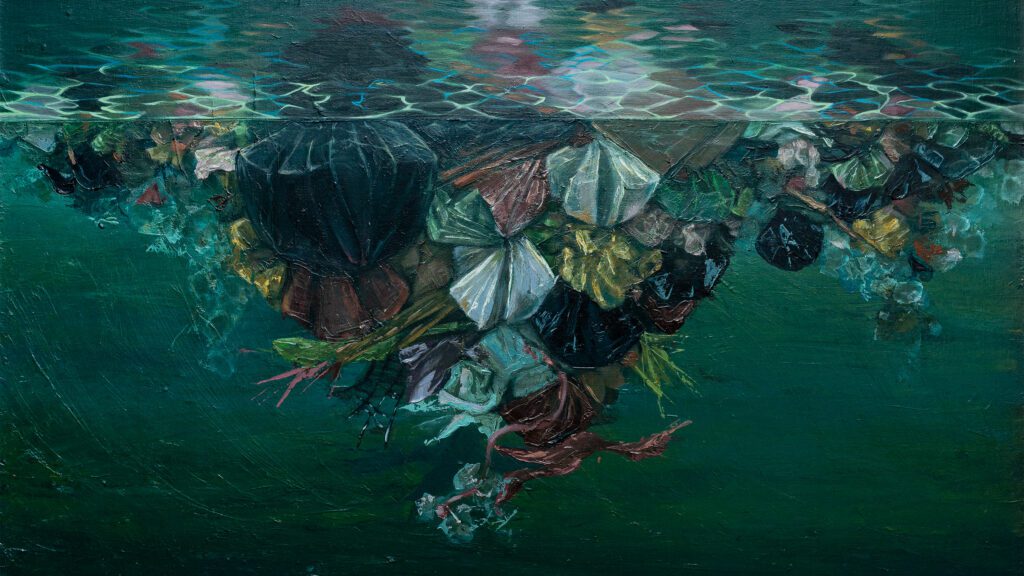
“Understanding the immensity of what’s at stake, how do we overcome the habit energy that drives us to pursue a kind of happiness that causes climate change?” I eventually picked something, but whether that item was a brightly colored notebook or a plastic cup with a sassy quip, I can’t recall what it was. However, I do remember that by the time I got home and unwrapped it on the kitchen counter, the promise of happiness had already faded. Like every other unnecessary item I’d ever purchased with the certainty that this was the thing that would finally solve the painful conundrum of being human, this thing was just more clutter. My interest in decluttering began on a family retreat with Thich Nhat Hanh. During one of his dharma talks, the Zen monk momentarily caught my eye while encouraging families to create what he called a breathing room—a space in the home for the practice of peace and compassion. A working mom of four school-aged kids, I became determined to create a breathing room for my family. I knew this meant I would need to let go of all the outgrown clothes, unused toys, and unfinished craft projects overwhelming our home. Yet when I attempted to do this, I realized that these possessions (possessions I’d purchased with the desperate hope that they could provide relief from suffering) were now causing me to suffer. Guilt, regret, worry, and anxiety about waste rose up to consume me, draining me of any real hope for change. And there, in the midst of my clutter, I bore witness to an endless cycle: Consuming emotions lead to consumer habits. Consumer habits lead to consuming emotions.“Wade” by Devan Horton www.devanhorton.comIn time, I became a professional declutterer, helping people realize that they—like me—had been caught in this cycle of consumption. I could hardly blame them for (literally) buying into the same delusion I had fallen for. The impulse to buy is remarkably human—and chasing after happiness even more so. Yet we’re not simply pursuing happiness; we’re running from our suffering toward some unfillable promise that, if we buy enough of the right things, we’ll find refuge. We know that illness, aging, and death are inextricable from our lives, and yet we still have the tendency to grab at every bauble as if it were a life preserver—an antidote to our impermanence. But our futile pursuit of a happiness that can be bought and sold is not just costing us in terms of overstuffed closets. I realized this when I transitioned unexpectedly from decluttering to the field of climate change.
When I started working in climate, I learned that for every “happy bargain” I purchase, a puff or two of carbon dioxide ascends to the atmosphere where it will remain for decades, trapping heat on the earth’s surface and warming the planet. Independently, the costs of my personal consumption are inconsequential. But multiply my habits by billions of consumers, and we begin to see the damage in millions of metric tons of daily carbon dioxide emissions.
We are pursuing individual happiness at the cost of our collective survival. We’re each attempting to outrun our suffering, and that suffering is gathering force in the atmosphere and circling back only to create more suffering. And though ultimately that suffering will touch every life on our planet, it will most gravely and unjustly impact those communities with the least economic resilience: those with the least economic capacity to run will suffer for the folly of those who have the economic resources to run the fastest. Our independent choices are no individual matter. We are careening down a dangerous path carried along by the momentum of what Thich Nhat Hanh would call our “habit energy”—energy acquired from our society that moves us along expediently without conscious thought or regard for outcome.
Understanding the immensity of what’s at stake, how do we overcome the habit energy that drives us to pursue a kind of happiness that causes climate change? One answer comes from a few lines of a gatha—a simple verse that I learned along with my children on that family retreat with Thich Nhat Hanh so many years ago:
Breathing in, I see myself as a flower. Breathing out, I feel fresh. Breathing in, I see myself as a mountain. Breathing out, I feel solid. Breathing in, I see myself as space. Breathing out, I feel free.
Here, in the midst of our steady, mindful breath, we’re reminded that the freshness and freedom we seek are not just characteristics of flowers and wide-open spaces; they’re also qualities inherent in us. We are reminded that, like mountains, we are solid and dignified; we have the sovereign capacity to be present to our suffering without being carried away by it or the urge to run from it.
So, the next time you’re standing in a superstore amidst overflowing bins wondering which bargain might offer respite from your discomfort, or your finger is hovering over the “Buy Now!” button on your phone screen, take some gentle breaths and repeat thatgatha, reminding yourself that freshness and freedom aren’t commodities, but gifts you carry. Tell yourself that you are solid as a mountain, and recall that you need not be carried away by your emotions or driven to consume as a panacea for your pain. In doing this, you won’t independently solve the problem of climate change, but you’ll resist the cycle of consumption driving it.
An equitable transition to a low-carbon economy is essential to our collective survival. We should work toward that transition with the urgency it demands. We should keep taking to the streets and calling our legislators to demand just environmental and economic policies that center the safety of the most marginalized. And as we do so, we can and should do what the Buddha proposed over two thousand years ago: stop trying to outrun suffering. Only then will we realize that happiness was never out of reach. Happiness and suffering—inevitable partners in life—dwell in the same location: precisely in the place we sit.
From zen and the art of saving the planet bookclub meeting on feb 14 2022
One Jeff Franklin highlighted these excerpts:
"This is why the point of departure for a new civilization must be a determination to not be 'colonized' by material goods--to rebel against materialism in favor of our need to be a human being" (137)
"In Buddhism the means and the ends should be identical. There is no path leading to happiness; the path is happiness itself." (161)
"You have to establish a strategy of mindful consuming with your loved ones and friend--a strategy to support and protect each other." (173)
"So, the truth is that, we have to learn how to transform our own suffering so we can be there for those who are suffering and need our help." (192-3)
Sister T.D. on training to listen: 1. follow our breathing; 2. aware of how the other's suffering affects our breathing; 3. practice the "art of not-interrupting"; 4. "cultivate a genuine curiosity"; 5. "keep our compassion alive during the whole time of listening" (198-99)
6. train in "hearing what's being left unsaid" (199)
simona: Could you share a time when you felt truly heard & listened to. What was that like in your body and what did the listener do to indicate that they were really listening? Share a time when you listened deeply. What was that like for you? What were the challenges?
Is there a difficult dialogue that you are currently engaging in, and how may you be willing to shift?
Talking w/ Richard Brady in this session #3.
Nice story about your walk with your friend. Seems that so many of my walks with friends include negative talk of some kind...leaving me unrefreshed.
It's like talk is used to obliterate the discomfort of ill-being and confusion about myself.
It's like talk is used to obliterate the discomfort of ill-being and confusion about myself.
"Acknowledging other person's feelings."
"Clearing" By Martha Postlethwaite Do not try to save the whole world or do anything grandiose. Instead, create a clearing in the dense forest of your life and wait there patiently, until the song that is your life falls into your own cupped hands and you recognize and greet it. Only then will you know how to give yourself to this world so worthy of rescue.
When we stop feeding our cravings, says Thich Nhat Hanh, we discover that we already have everything we need to be happy.
The human mind is always searching for possessions and never feels fulfilled. This causes impure actions ever to increase. Bodhisattvas, however, always remember the principle of having few desires. They live a simple life in peace in order to practice the Way and consider the realization of perfect understanding as their only career.
—The Sutra on the Eight Realizations of the Great Beings
The Buddha said that craving is like holding a torch against the wind; the fire will burn you. When someone is thirsty and drinks only salty water, the more he drinks, the thirstier he becomes. If we run after money, for example, we think that a certain amount of money will make us happy. But once we have that amount, it’s not enough; we think we need more. There are people who have a lot of money, but they are not happy at all. The Buddha said that the object of our craving is like a bone without flesh. A dog can chew and chew on that bone and never feel satisfied.
We all experience moments when we feel lonely, sad, empty, frustrated, or afraid. We fill up our feelings with a movie or a sandwich. We buy things to suppress our pain, despair, anger, and depression. We find a way to consume, in the hopes that it will obliterate the feelings. Even if a TV show isn’t interesting, we still watch it. We think anything is better than experiencing the malaise, the ill-being in us. We have lost sight of the reality that we already have all the conditions we need for our own happiness.
Each of us has our own idea of happiness. It’s because of this idea that we run after objects we desire. We sacrifice our time and, to a certain extent, destroy our bodies and our minds. According to the Buddha, happiness is simple—if we go home to the present moment, we realize that we have more than enough to be happy right here and now. All the wonders of life are in us and around us. This realization can help us release our craving, anger, and fear.
The more we consume, the more we bring in the toxins that feed our craving, anger, and ignorance. We need to do two things to return to mindful awareness. First, we can look deeply into the nutriment that is feeding our craving, examining the source. No animal or plant can survive without food. Our craving, just like our love or our suffering, also needs food to survive. If our craving refuses to go away, it’s because we keep feeding it daily. Once we have identified what feeds our craving, we can cut off this source of nutriment, and our craving will wither.
The second practice is mindful consumption. When we end our consumption of things that feed our craving, ignorance, and wrong perceptions, we can be nourished by the many wonderful things around us. Understanding and compassion are born. Joy in the present moment becomes possible. We have a chance to transform our own suffering.
The Four Nutriments
The Buddha spoke of four kinds of nutriments, the four kinds of foods that we consume every day. Our happiness and suffering depend very much on whether what we consume is wholesome or unwholesome.
SIGN UP FOR LION’S ROAR NEWSLETTERS
Get even more Buddhist wisdom delivered straight to your inbox! Sign up for Lion’s Roar free email newsletters.
THE FIRST NUTRIMENT: EDIBLE FOOD
The first kind of nutriment is edible food—what we put into our mouth and chew, swallow, or drink. Most of us instinctively know what food is healthy for our bodies and what food isn’t, but we often choose not to think about it. Before eating, we can look at the food on the table and breathe in and out to see whether we are eating food that is making us healthy or making us sick. When we are away from home, whether we are eating a snack on the go, dining at an event, or grazing on something while at work, we can pause and decide to eat only the most nourishing food. This is mindful eating.
Mindful eating can begin with mindful shopping. When we go grocery shopping, we can choose to buy only food that feeds our well-being. We can use the cooking of this food as an occasion to practice mindfulness. At the table, we can be silent for a moment. We can practice breathing in and out and give thanks for the healthy food in front of us.
THE SECOND NUTRIMENT: SENSORY IMPRESSIONS
Sensory impressions are what we consume with our eyes, ears, nose, body, and mind. Television programs, books, movies, music, and topics of conversation are all items of consumption. They may be healthy or toxic. When we talk with a good friend or listen to a dharma talk, the seeds of compassion, understanding, and forgiveness are watered in us, and we are nourished. But an advertisement or film can touch the seed of craving in us and make us lose our peace and joy.
When we drive through the city, we consume, whether we want to or not. We are assaulted twenty-four hours a day by sensory impressions on billboards, on the radio, and all around us. Without mindfulness, we are vulnerable. With mindfulness, we can be aware of what we are seeing, hearing, smelling, and touching. Our mindful awareness can help us change the focus of our attention and be nourished by the positive things around us. The blue sky, the sounds of birds, the presence of a friend—all of these things feed our compassion and joy.
THE THIRD NUTRIMENT: VOLITION
The third kind of nutriment, volition, is also called aspiration or desire. Every one of us has a deep desire, and we are nourished by that desire. Without desire, we wouldn’t have the energy to live. That deepest desire can be wholesome or unwholesome. When Siddhartha left the palace to follow a spiritual path, he had a desire to practice and to become enlightened in order to help people suffer less. That desire was wholesome, because it gave him the energy to practice, to overcome difficulties, and succeed. But the desire to punish another person, to acquire wealth, or to succeed at the expense of others, is an unwholesome desire that brings suffering to everyone.
Each of us can look deeply to recognize our deepest desire, to see whether it is wholesome. The desire to help fight pollution and preserve our planet is something wonderful. But our craving for money, power, sex, fame, or to punish others only leads to ill-being. That kind of desire pulls us in the direction of death. If we find this kind of volition rising up in us, we need to stop and look deeply. What is behind this desire? Is there a feeling of sadness or loneliness we are trying to cover up?
THE FOURTH NUTRIMENT: CONSCIOUSNESS
Consciousness here means collective consciousness. We are influenced by the way of thinking and the views of other people in many ways. Individual consciousness is made of collective consciousness, and collective consciousness is made of individual consciousness.
It is our collective consciousness that determines how we live in the world. If we aren’t mindful and we live in an environment where people around us are very angry, violent, or cruel, then sooner or later we’ll become angry and cruel as well. Even if we intend to be compassionate and kind, we can’t help but be influenced by the collective consciousness. If everyone else around us is consuming material things and giving in to craving, it is more difficult to maintain our mindful awareness. This is especially true for our children. When we put our children in an environment, they may be as influenced by that environment as they are by our parenting.
Most of us don’t live in an environment where people are always peaceful, compassionate, and open. But we can be mindful of creating a community around us that fosters these qualities. Even if it is only our house or our block or our small community, we need to surround ourselves with compassionate people.
The Buddha said, “If you know how to look deeply into the nature of your craving and identify the source of nutriments that have brought it in to you, you are already at the beginning of transformation and healing.” Every kind of ill-being has been brought to us by one or more nutriments. Looking into the nature of ill-being in terms of the four nutriments can lead us onto the path of mindful consumption, which is the path to well-being.
Mindful Consumption
More than two thousand years ago, the Buddha offered guidelines called the Five Wonderful Precepts to his lay students to help them live peaceful, wholesome, and happy lives.
I have translated these precepts for modern times as the Five Mindfulness Trainings, because mindfulness is at the foundation of each of them. The First Mindfulness Training focuses on reverence for life; the second on generosity and right livelihood; the third on true love and sexual responsibility; the fourth on deep listening and right speech.
The Fifth Mindfulness Training, focusing on health and healing through mindful consumption, says: “Aware that true happiness is rooted in peace, solidity, freedom, and compassion, and not in wealth or fame, we are determined not to take as the aim of our life fame, profit, wealth, or sensual pleasure, nor to accumulate wealth while millions are hungry and dying. We are committed to living simply and sharing our time, energy, and material resources with those in need. We will practice mindful consuming, not using alcohol, drugs, or any other products that bring toxins into our own and the collective body and consciousness.”
We can make a decision to follow this training and commit to not consuming anything that brings toxins into our body and mind. Mindful consumption is the way out of craving, not only for us as individuals, but also for the whole world. The only sustainable way for human life to continue is if we consume less and become content with fewer possessions. Once we are able to live simply and happily, we are better able to help others. We have more time and energy to share.
Mindful consumption means looking deeply into your desire to consume, as it arises, staying with that desire until you have some insight into its origins and the intention at its base. When we perceive something, anything at all, we create a sign of it in our mind. A sign is the object of our perception. When we look at a friend, for example, we first see her appearance. We see a self. But if we look deeply into the appearance of our friend, we see elements in her that are not her. We see the air and water, the earth and the sun in her. We see her ancestors in her. So we are not caught in thinking her appearance, her sign, is all she is.
Wherever there is a sign, a mark, an appearance, there is deception. Signs trick and deceive us. But we can break through the veil of signs, and see the nature of things as they are. Seeing the nature of reality is not the fruit of twenty years of meditation; it is our daily practice. We can do it at home, at work, or wherever we are. When we look deeply, we can discover the true nature of a person or a thing; we see the characteristics of interdependence and interconnection. We touch reality as we eat, as we drink. We see the piece of bread as the reality it is; we see our brother, our sister, our partner, our children, and our colleagues at work as they truly are. We can look deeply into the nature of money or material possessions and see that they will not bring us any more happiness than is already available to us. The more we look deeply, the more clearly we see, and reality reveals itself to us bit by bit. When we see reality as it is, there is no craving, no anger, and no fear.
Running after our cravings has brought us a lot of suffering and despair. Committing to mindful consumption is committing to our own happiness. It is a conscious decision to make space for the happiness that is available in each step and each breath. Every breath and every step can be nourishing and healing. As we breathe in and breathe out, or as we take a mindful step, we can recite this mantra: “This is a moment of happiness.” It doesn’t cost anything at all. This is why I say that mindful consumption is the way out of suffering. The teaching is simple, and the practice is not difficult.
These are recent iterations of the 5 Mindfulness Trainings
the 5th Mindfulness Training
Nourishment and Healing
Aware of the suffering caused by unmindful consumption, I am committed to cultivating good health, both physical and mental, for myself, my family, and my society by practicing mindful eating, drinking, and consuming. I will practice looking deeply into how I consume the Four Kinds of Nutriments, namely edible foods, sense impressions, volition, and consciousness. I am determined not to gamble, or to use alcohol, drugs, or any other products which contain toxins, such as certain websites, electronic games, TV programs, films, magazines, books, and conversations. I will practice coming back to the present moment to be in touch with the refreshing, healing and nourishing elements in me and around me, not letting regrets and sorrow drag me back into the past nor letting anxieties, fear, or craving pull me out of the present moment. I am determined not to try to cover up loneliness, anxiety, or other suffering by losing myself in consumption. I will contemplate interbeing and consume in a way that preserves peace, joy, and well-being in my body and consciousness, and in the collective body and consciousness of my family, my society and the Earth.